The Cup cafe

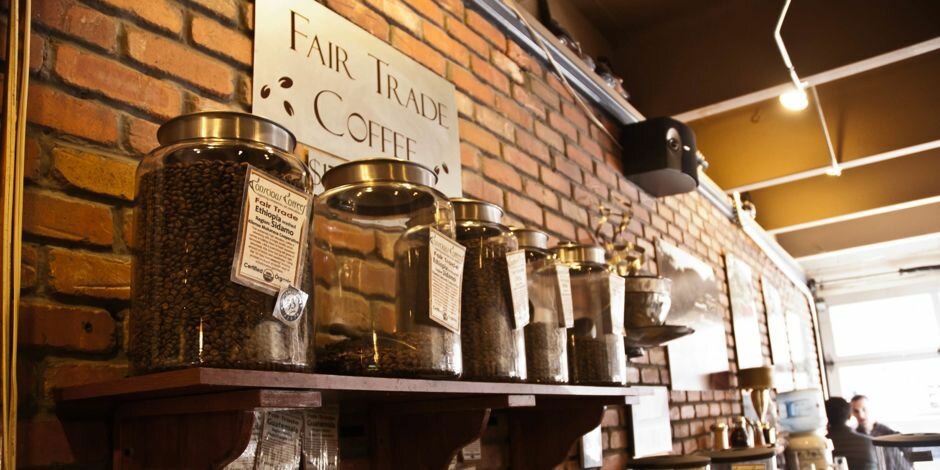
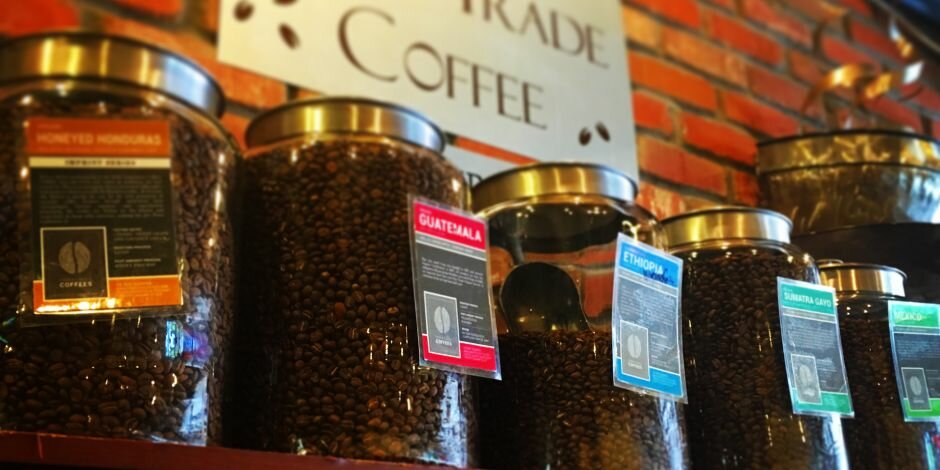
Our Fair Trade, Organic Coffees

MEXICO
Yachil (Xojobal Chu’lchan)

Yachil Xojobal Chu’lchan, which means “new light in the sky” in the Tzeltal language, has members from the Tzotzil and Tzeltal Mayan indigenous groups supportive of the Zapatista autonomous movement working towards respect for Indigenous rights. In 2001, Yachil began to organize its first members with 383 producers from the municipalities of Chilon, Pantelho and San Juan Cancuc.

In 2003 Yachil sold its first container to Germany, and in 2004 they sold just over 2 containers to Germany and 1 into the US. They currently are comprised of 1,552 members in seven municipalities, with an export capacity of some 27 containers.

Members of this fair trade coffee cooperative have formed their own local Indigenous governments, which focus on community development efforts to promote democracy, equality, and empowerment. Members do not accept government handouts. Over the last decade members of Yachil have suffered repression at the hands of government security forces and the paramilitary. Many members and their families have been forced to flee their communities as internal refugees and they continue to be victims of oppression, intimidation, and even assassination.

Each season we visit these communities and experience the tribulations they face on a daily basis. We provide a “solidarity” premium in each lot of green coffee we purchase which assists them in working through the pressures and continue to strengthen the structure of their indigenous heritage.

GUATEMALA
APECAFORM

APECAFORM (Asociación de Pequeños Caficultores Orgánicos Maya-Mames) is comprised of 400 members living in 19 communities. The coop is located in the Southwestern Highlands of San Marcos, on the slopes of Volcano Tajumulco, and was founded in 1992. A Central Board of Directors guides and executes the main activities of Apecaform and coordinates tasks with  five Local Boards of Directors, based in community centers. In addition, 21 local promoters coordinate and conduct technical trainings to improve organic agricultural practices, and to facilitate commercialization and a variety of social projects.

APECAFORM has been in certified organic production since 2002. There are now 266 members under certification and 80 percent of their total production goes to the the Fair Trade market for sale. Through a strategic credit partnership between EcoLogic, Apecaform, and Cooperative Coffees (our green coffee buying group), producers have been able to increase direct Fair Trade sales to a variety of global buyers.

Achievements from the fair trade premiums include purchasing land and constructing a warehouse in Malacatan, creating a community fund to support their network of organic promoters and coordinators, and installing a wet mill and dry processing plant to make production more effective.

We are currently working on two projects with APECAFORM. The first is construction of a wet processing plant in each of the five community centers. The second is to administer a timely credit fund capable of offering producers adequate pre-financing.

COLOMBIA
Fondo Paez – Café Naftewesh

The Paez (who also call themselves Nasa, or "the people") is the largest indigenous group in Colombia. Their land is in the Cordillera Central – centered around the mountains of the Cauca departamento (state).  Fondo Paez was founded in 1992, with the primary goal of recuperating traditional agricultural knowledge and indigenous culture which had been buried by centuries of conflict and oppression. 

Fondo Paez currently processes, markets, and exports their coffee through the Federation, but are completely independent in their internal decision-making process. They are governed democratically and incredibly well organized. They have been recently incorporated as an association in Colombia with its own legal identity. The work and successes of this organization are truly extraordinary when viewed within the context of Colombian politics and globalization.

The organization provides technical assistance for quality control and organic production to its cooperative members. Fondo Paez then works with these primary cooperatives to collect coffee and transport it to a nearby beneficio (coffee mill) to be processed. The coffee farmers are equal owners in the organization and receive not only the social benefits provided by Fondo Paez but also retain a much higher percentage of coffee profits compared to non-direct trade farmers.

Fondo Paez is completely committed to the self-sufficiency of their people and have a holistic approach to farming. This is most evident on their farms. Coffee is only one of many crops that are incorporated into a diverse, agro-forestry system. Food crops for their own consumption, feed crops for the farm animals and nitrogen fixing plants for the soil are given equal importance to their cash crops; coffee, sisal, beans, and different fruits.

PERU
CEPICAFE

The Central Piurana de Cafetaleros (CEPICAFE) was founded in March 1995 and has grown to support 80 base organizations and a total of 6,363 producers in the Piuran mountains, Amazon region, and the Cajamarca. Unfortunately, despite the hard work that has gone into coffee in this prime productive region, farmers continue to live under the most rudimentary conditions. Nevertheless, Anselmo Huaman Moreto from the Producer Board of Directors explains how our fair trade alliance has affected the cooperative: “A huge difference in our lives is that now our children can actually go to school, our coffee is being recognized in the market for the quality we produce, and our members can be proud again to be farmers.”

Through the consolidation of producer organizations under the CEPICAFE umbrella, producers are now active and respected agents for sustainable development in their region. They have worked collectively to improve quality and overall production under certified organic practices, increasing their exports from 550 quintales in 1997 to 39,373 quintales into a range of specialty markets over the past 10 years. Farmers also enjoy access to financing and to development projects. This has facilitated the diversification of their production base to include a range of products from brown sugar, marmalades, and cocoa to crafts and coffee tourism.

The gains recognised from Fair Trade premiums have enabled the coop to begin construction on a green coffee processing plant with capacity to include a coffee roasting and packaging plant, as well as production and packaging facilities for their alternative products. The project is expected to be running in early 2008.

ETHIOPIA
OCFCU – Oromia Coffee Farmers Cooperative Union

Ethiopia is the birthplace of coffee and yet the fourth poorest country in the world. Coffee farmers live a very traditional lifestyle, farming less than 5 acres. They live in stick houses where electricity, running water, and indoor plumbing are rare.

Oromia (OCFCU) was established in 1999 to facilitate the direct exportation of coffee produced by Ethiopia's small farmers and assist in marketing, processing, and credit issues.  The union is comprised of 101 cooperatives, made up of 74,795 members as of 2006. OCFCU works exclusively in Oromia Regional State, which accounts for 65 percent of the country’s total coffee growing land and includes coffees from Limu, Sidamo, Yirgacheffe, Nekemte, Jimma, Sidamo, Neqemte/ Ghimbi, and Harar. 

Establishing a direct relationship with the farmers is our primary mission at Conscious Coffees. As a member of Cooperative Coffees we were one of OCFCU’s first buyers and the first foreign importer to travel and meet the farmers.

“Before people would not come here, but treat us like animals and oppress us,” said the elder Tasew Gebru of the Nagelle Gorbitu Cooperative. “We appreciate your efforts, and to help us improve our lives; we really have seen an improvement in the last two years.”

As a direct result of our fair trade premiums they have constructed four schools, two health clinics and a clean water supply. They now have a cupping lab located at their office and are in the process of constructing two warehouses. They hope to have their own processing plant within the next three years.

INDONESIA- SUMATRA
PPKGO – Forestrade

Persatuan Petani Kopi Gayo Organik (Gayo Organic Coffee Farmer’s Association or PPKGO) is a 1400-member farmer's cooperative working in 24 communities of the Gayo Highlands of Sumatra. PPKGO is headquartered in Aceh, the Indonesian province continually devastated by earthquakes and tsunamis.

This region is renowned as the largest producer of Arabica coffee in Southeast Asia, as well as the ceaseless civil war between Acehnese separatists and the Indonesian military. American investment in this area has otherwise been limited to the embattled Exxon Mobil Oil Co. and natural gas facility in Lhoksemauwe.

PKGO currently produces 1,500 tons of coffee and is Indonesia’s only Fair Trade and Organic Certified coffee cooperative. Conscious Coffees has been supporting this cooperative since the first harvest became available and we’ve worked directly with to improve the cup quality of their coffee. We have been experimenting with several processing and preparation techniques expanding our ability to offer several types of coffee from PPKGO. We currently import traditional un-washed as well as semi-washed, washed, and decaffeinated lots. Each variety is unique and has a variety of applications in our blending practices. Our decaf continues to be one of the highest scoring decaf coffees available each year.

PPKGO includes members of Gayo, Javanese, and Acehenese ethnic groups and various religions, including Christians. This diversity has strengthened the cooperative which is an incredible feat in the midst of such intercultural and now economic strife in the region.

We consider Sumatra not just a coffee source, but more importantly home to our producer partners, their families, and the communities and organizations they have constructed.

EAST TIMOR
Café Timor

East Timor is an independent country located on an island South East of Sumatra. The western part of the island is a provence of Indonesia (West Timor). East Timor coffee production is small in the global coffee context, producing less than one percent of the international total. Nevertheless, coffee is crucial to the country’s overall economy. It is the most important source of foreign exchange for East Timor and it serves as the primary source of income for about one-fourth of the country’s population. Our support, with the premiums payed to them through Fair Trade, is crucial to  these farmers’ existence.

After the 1999 referendum for independence, the Indonesian army and its militias devastated East Timor’s coffee industry by killing and displacing farmers and their families, stealing and destroying most of the coffee crop, and destroying roads, warehouses, and other infrastructure vital to the industry.   But, with support since 1994 from the US National Cooperative Business Association (NCBA), some 19,000 small-scale coffee farmers have organized in 16 organic cooperatives and 493 producer groups to create a national cooperative structure known as the Cooperativa Café Timor (CCT). Since the 1999 referendum, the NCBA project has worked quickly and under difficult conditions, in order to help East Timor farmers organise and export their crop.

Positive results from these collective efforts are already being seen in the countryside. Café Timor is the only independent producer of wet-milled coffee, which significantly increases its quality and market value.  NCBA funds and Fair Trade premiums have helped Café Timor set up a network of eight fully operational health clinics and 24 mobile clinics, making them the largest provider of rural health care in the country!

Conscious Coffees has been partnered with CCT since the arrival of the first containers into the US market. This is an incredibly unique Malay Archipeligo coffee that is fermented and washed with a deep, sweet body. Each year the coffee quality improves and cupping scores continue to rise.

BOLIVIA
FECAFEB

The Federation of Exporting Coffee Producers (FECAFEB) was founded in 1991 as a national organization to defend the rights and needs of small-scale coffee farmers. FECAFEB has taken huge steps forward and seems to be right in stride with the new Bolivian political reality in support of Indigenous voice and rights. FECAFEB is currently comprised of 30 coffee producer organizations, representing some 8,700 families.

In May, 2006, we travelled over 1000 km throughout the coffee growing regions (the Yungas) to visit with producers and communities of FECAFEB. On this trip we contracted our first ever direct purchase of Bolivian coffee from a producer community named AIPEP (Associacion Integral de Productores Ecologicos de Pumiri). AIPEP has been certified organic by IMO Control since 2002, but to date has not been able to export directly, nor be adequately compensated for their organic investment. We are the first buyers to ever offer AIPEP a direct trade relationship.

AIPEP currently has 32 founding members and 22 recently enlisted. The founding members have worked hard to construct impressive internal systems for excellent organic production and quality control, as well as solid mechanisms for assuring participation and administrative oversite by the members.

On this trip we also formualted a plan to return in October and hold the countries first ever Fair Trade coffee event....the Bolivian Cup of Fair Trade. Conscious Coffees in conjunction with Cooperative Coffees, FECAFEB, Cathlic Relief Services, Transfair Canada, and BOCAFE (Association of Bolivian Cuppers of Coffee), organised and executed an incredibly successful, national coffee event that empowered countless small-scale farmers, strengthened community cooperatives, and aims to further increase the quality standards from Fair Trade harvests.

UPCOMING CUPPING

  • TBA
  • 9:00 am
  • Theme: TBA
  • Free parking in the garage across the street on Saturdays and Sundays